The countdown to America’s 250th anniversary has officially begun — and it’s jingling in your pocket.
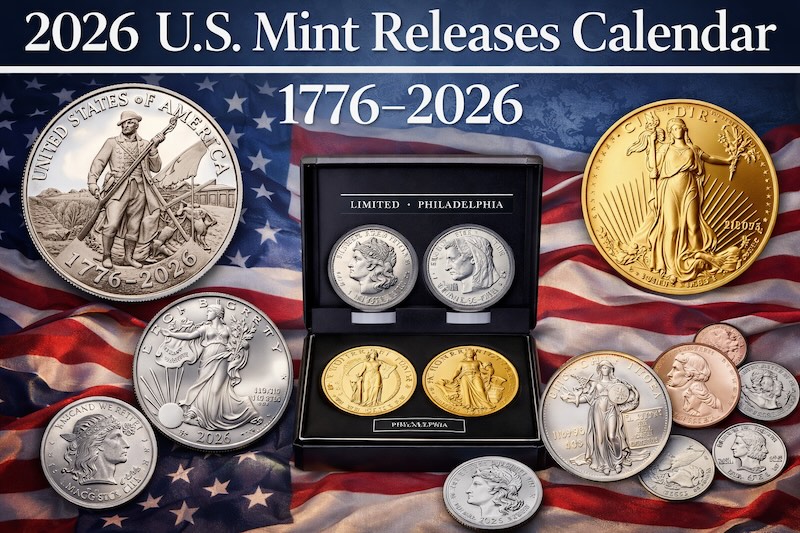
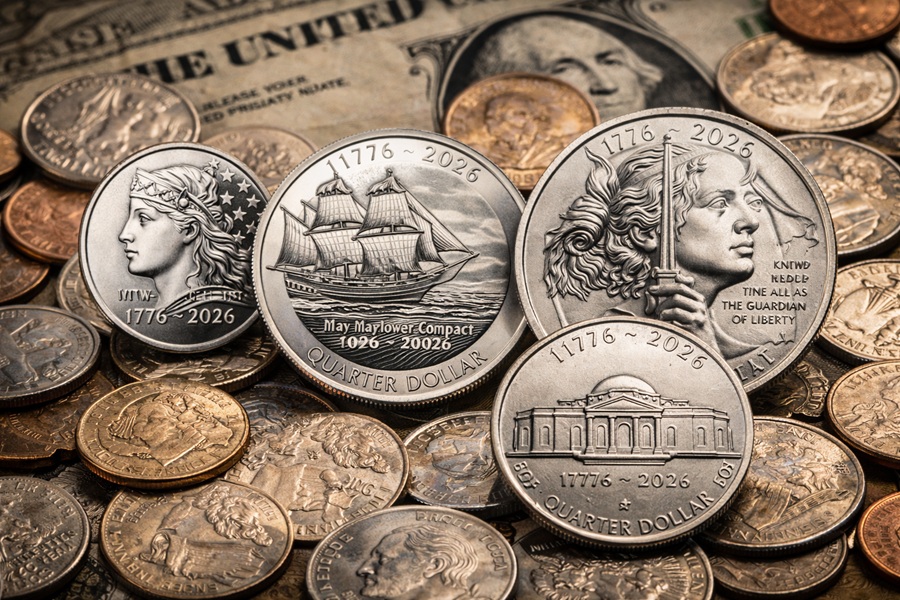
On January 5, the U.S. Mint started shipping the first wave of 1776 ~ 2026 semiquincentennial coins to Federal Reserve Banks, launching one of the most historically significant circulating redesigns in modern U.S. numismatic history. For coin collectors in the U.S., industry professionals, investors, and even the general public, this marks a rare moment when anniversary coinage moves directly into everyday commerce.
Dual-dated coins don’t appear often. A coordinated, multi-denomination redesign tied to a once-in-250-year milestone? That’s exceptionally rare.
Let’s break down what’s shipping, what it means for collectors, and how these coins may shape the numismatic landscape heading into 2026 and beyond.
Why the 1776 ~ 2026 Semiquincentennial Coins Matter
The last time Americans saw a major circulating commemorative redesign of this scale was during the Bicentennial in 1975–1976, when dual-dated quarters, half dollars, and dollars bore the famous “1776–1976” inscription.
Now, five decades later, the U.S. Mint 2026 coins revive that tradition for the nation’s semiquincentennial.
Key reasons this matters:
- Historical milestone: 250 years since the Declaration of Independence.
- One-year-only circulating designs.
- Multiple denominations redesigned simultaneously.
- Strong crossover appeal between collectors and the general public.
In my experience as a numismatic professional, anniversary issues like these often create a surge of interest from casual collectors — and sometimes reignite dormant hobbyists.
Emerging Liberty Dime: A Break from Roosevelt
The 2026 Emerging Liberty Dime
For the semiquincentennial year, the Roosevelt portrait has been replaced with the Emerging Liberty Dime, marking a dramatic design departure.
Obverse highlights:
- Dual date: 1776 ~ 2026
- A forward-facing Liberty
- Liberty cap featuring stars and stripes
- Windswept symbolism reflecting revolutionary spirit
Reverse:
- Eagle in flight carrying arrows
- Strong Revolutionary imagery
This marks one of the most significant temporary departures from a long-standing design since the State Quarters program reshaped circulating quarters in 1999.
Why This Design Shift Is Important
Design changes on the dime are historically rare. Roosevelt has appeared since 1946. Temporarily replacing him is symbolically powerful.
From a collector standpoint:
- First-year circulation examples may carry premiums in high grades (MS67+).
- Full roll finds could become desirable long-term.
- Condition rarity will matter more than mintage totals.
Enduring Liberty Half Dollar Enters Circulation
The Enduring Liberty Half Dollar is another centerpiece of the 1776 ~ 2026 semiquincentennial coins program.
Obverse:
- Close-up of the Statue of Liberty
- Dual date inscription
Reverse:
- Liberty passing the torch
- Emphasis on knowledge safeguarding liberty
Unlike commemorative-only issues, this half dollar is being struck for circulation quality.
A Practical Reality
Half dollars rarely circulate heavily in everyday commerce. Most are distributed in bulk to banks and collectors.
For roll hunters and professionals:
- Early Mint State rolls may offer future grading potential.
- Circulation-worn examples may remain scarce simply due to low public usage.
Mayflower Compact Quarter: The First 2026 Quarter to Circulate
The Mayflower Compact Quarter was the first of the five 2026 quarter designs to enter circulation.
The quarter series continues the multi-design model used successfully in:
- 50 State Quarters (1999–2008)
- America the Beautiful (2010–2021)
- American Women Quarters (2022–2025)
What We Know
- Five quarter reverses are scheduled for 2026.
- Designs celebrate foundational moments and themes.
- Additional releases will follow throughout the year.
Historically, first-release quarters tend to receive disproportionate attention — particularly from roll hunters.
The 2026 Dual-Dated Nickel
The Jefferson nickel remains largely unchanged in design but carries the 1776 ~ 2026 dual date.
Though less dramatic visually, dual-dated coins historically hold strong nostalgic appeal.
Collectors should note:
- Nickels often circulate widely.
- High-grade examples can be tougher than expected.
- Bulk mint-set hoarding may affect long-term supply.
Regional Rollout: What to Expect
Federal Reserve distribution patterns vary regionally. As with prior circulating redesigns:
- Some regions will see coins weeks before others.
- Early finds often command online resale premiums.
- Secondary market pricing usually stabilizes quickly.
For professionals managing inventory, early access can drive short-term retail demand.
Gold Coins and Silver Medals: “Best of the Mint” Sets
Beyond circulating issues, the U.S. Mint will release five semiquincentennial gold coin and silver medal pairings featuring:
- Weinman’s Mercury Dime
- MacNeil’s Standing Liberty Quarter
- Walking Liberty Half Dollar
- 1804 Dollar
- Saint-Gaudens 1907 Double Eagle
These reinterpretations tap into iconic American numismatic designs.
For investors:
- Gold content value will anchor pricing.
- Limited mintages may drive collector premiums.
- Secondary performance will depend on issue price and market timing.
Additionally:
- American Eagle coins will feature the dual date.
- Innovation dollars will include a “250” privy mark.
Market Implications for Collectors and Investors
1. Short-Term Premium Opportunities
Early roll finds and first-release grading submissions often generate excitement.
However, history shows:
- Massive mintages can suppress long-term value.
- Condition rarity becomes the key differentiator.
2. Grading Strategy Matters
If submitting for certification:
- Focus on pristine, high-luster examples.
- Look for strong strikes and minimal contact marks.
- Target MS67 or higher.
3. Speculation Risks
While anniversary coins generate buzz, investors should remain cautious.
Potential risks include:
- Oversupply from hoarding.
- Secondary market saturation.
- Economic downturn reducing discretionary spending.
Balanced perspective is essential, especially under YMYL principles.
Historical Perspective: Lessons from 1976 Bicentennial Coins
The 1976 Bicentennial issues were:
- Hoarded heavily.
- Saved in rolls nationwide.
- Ultimately worth modest premiums decades later (except in high grades).
The lesson?
Historical significance does not guarantee high future value. Condition and scarcity do.
Looking Ahead: 2027 and Beyond
Starting in 2027:
- The dime reverts to Roosevelt.
- The quarter and half dollar transition into a four-year Youth Sports and Paralympic Sports program.
This makes the 2026 designs truly one-year-only circulating issues — a factor that strengthens long-term collector appeal.
TL;DR Summary
- The U.S. Mint has begun shipping 1776 ~ 2026 semiquincentennial coins.
- Emerging Liberty Dime and Enduring Liberty Half Dollar headline the redesign.
- Five 2026 quarter designs are planned.
- Gold and silver commemorative sets will accompany circulating coins.
- Long-term value will depend more on condition than mintage.
- Rollout varies regionally.
Frequently Asked Questions
1. Are the 1776 ~ 2026 semiquincentennial coins rare?
They are one-year-only designs but not inherently rare. High-grade examples may become condition rarities.
2. Should I save rolls of 2026 coins?
Saving rolls can be reasonable for hobby purposes, but large-scale speculation carries risk.
3. Will these coins increase in value?
Most circulation issues appreciate modestly unless they are low mintage or high-grade certified examples.
4. Are there silver versions of the circulating coins?
Silver versions may be available in collector sets, but circulating issues are standard clad composition.
Conclusion: A Once-in-a-Generation Circulating Coin Moment
The arrival of the 1776 ~ 2026 semiquincentennial coins marks a pivotal moment in modern U.S. numismatics. For the first time in 50 years, Americans will see dual-dated commemorative-style designs flowing directly through everyday commerce.
For collectors, this is a historic opportunity.
For investors, it’s a market to approach thoughtfully.
For the general public, it’s a tangible connection to America’s 250-year story.
My professional advice: enjoy the hunt, focus on quality over quantity, and remember — true numismatic value is built on patience and perspective.