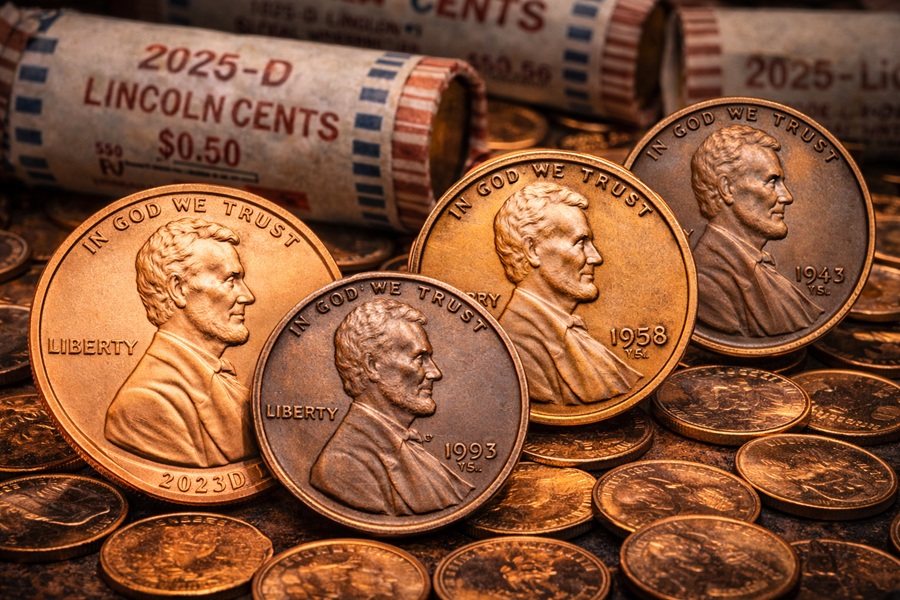
Few coins in American history command the emotional attachment, historical gravity, and market intrigue of the Lincoln Penny. For more than a century, this humble one-cent coin has passed through billions of hands — surviving wars, depressions, political upheaval, and, most recently, its own discontinuation.
Now that 2025 marked the final year of circulation for the Lincoln Cent, collectors and investors alike are asking the same question: What does this mean for values, rarity, and the future of the series?
Whether you’re a seasoned numismatist, coin investor, or simply someone who grew up dropping pennies into a jar, understanding the deeper history of the Lincoln Penny isn’t just fascinating — it’s financially relevant.
Let’s explore seven critical facts about the Lincoln Cent history that every serious collector should know.
1. The Lincoln Penny Was Born from Presidential Ambition
The Lincoln Penny did not emerge by accident. Its creation was driven by Theodore Roosevelt, who believed American coinage lacked artistic merit compared to European issues.
In 1904, Roosevelt enlisted renowned sculptor Augustus Saint-Gaudens to redesign U.S. coinage. Although Saint-Gaudens died in 1907 before completing the cent, his influence reshaped American numismatic aesthetics.
The actual designer of the Lincoln Cent was Victor David Brenner, whose portrait of Abraham Lincoln debuted in 1909 to commemorate the centennial of Lincoln’s birth.
The result? The first U.S. circulating coin to feature a real historical person — replacing the long-running Indian Head Cent.
This shift marked a turning point in American coin design philosophy and set the stage for portrait coinage that continues today.
2. The 1909-S VDB Lincoln Cent: Controversy Creates a Classic
Brenner placed his initials “V.D.B.” prominently on the reverse of the original 1909 Lincoln Wheat Cent. Public backlash followed almost immediately, leading the Mint to remove the initials within days.
However, 484,000 examples of the 1909-S VDB were struck at San Francisco before production ceased.
Today, the 1909-S VDB Lincoln Cent remains one of the most sought-after key dates in American numismatics.
- Low-grade examples: $700–$1,200
- Mint State examples: $2,000–$4,000+
- Superb Gem examples: five figures
Scarcity plus controversy equals enduring demand — a formula that often drives long-term collector value.
3. The Longest-Running Design in U.S. History
As of February 2025, the Lincoln Penny had circulated for 116 years, making it the longest-running coin design in U.S. history.
Reverse designs evolved over time:
| Years | Reverse Design |
|---|---|
| 1909–1958 | Wheat Stalks (Lincoln Wheat Cent) |
| 1959–2008 | Lincoln Memorial |
| 2009 | Bicentennial Series (4 designs) |
| 2010–2025 | Union Shield |
Despite reverse changes, Lincoln’s obverse portrait remained remarkably consistent — reinforcing brand identity and public recognition.
Longevity matters in numismatics. Continuous circulation builds generational familiarity, which often sustains collector interest.
4. The 1958 Doubled Die Lincoln Cent: Million-Dollar Rarity
Among all rare Lincoln Penny values, the 1958 Doubled Die Lincoln Cent stands at the pinnacle.
Only three confirmed examples exist.
This error resulted from Rotated Hub Doubling during die creation, causing dramatic doubling in:
- IN GOD WE TRUST
- LIBERTY
In 2023, a pristine specimen sold for $1.136 million at GreatCollections auction — a record-setting moment that underscored how error coins can rival classic rarities.
Ultra-low population plus dramatic visual error equals elite-level desirability.
For investors, this illustrates a key principle: rarity drives value more than age.
5. Composition Changes Reflect America’s Economic History
The Lincoln Penny composition changes tell a broader economic story.
1909–1942: Bronze
- 95% copper
- 5% tin and zinc
1943: Zinc-Coated Steel
Copper was needed for World War II ammunition. The Mint switched to steel planchets — creating the famous 1943 steel cent.
1944–1982: Bronze Returns
After wartime copper shortages eased.
1982–2025: Copper-Plated Zinc
- 97.5% zinc
- 2.5% copper
Rising copper costs made bronze unsustainable. In recent years, the Mint reported production costs exceeding face value — approximately 2.72 cents per coin.
From a financial standpoint, producing the penny became economically inefficient — a key factor in its eventual discontinuation.
6. Wartime Errors: The 1943 Bronze and 1944 Steel Cents
Few coins capture public imagination like the 1943 bronze Lincoln Cent.
During the 1943 steel cent production, a handful of leftover bronze planchets were mistakenly struck. One 1943-D bronze cent sold for $1.7 million in 2010 and later resold for $840,000.
Similarly, 1944 saw steel planchets mistakenly struck after bronze production resumed.
These off-metal errors highlight:
- Mint transitional vulnerability
- The power of accident in numismatic value
- The market premium for certified rarities
Such coins remain among the most famous American mint errors ever produced.
7. The Final Year: 2025 Lincoln Cent Market Reaction
The most significant modern development?
The Lincoln Cent ended circulation in 2025 following executive action by Donald Trump.
This announcement triggered immediate speculative activity.
On secondary markets like eBay, uncirculated 2025 and 2025-D rolls have reportedly sold for 300–350 times face value.
However, caution is warranted.
Historical Precedent:
Whenever denominations are discontinued, early price spikes are common. Over time:
- Supply increases as hoarded coins enter the market
- Speculative premiums soften
- Long-term value stabilizes based on condition and demand
Will 2025 Lincoln Cents retain premium value? Likely — but probably not at speculative peak levels.
Serious investors should focus on:
- Certified Mint State examples
- Low-population graded coins
- Error varieties
- Special Mint Sets
Pros and Cons of Investing in Modern Lincoln Cents
Advantages:
- Historic final-year status
- Massive public recognition
- Strong nostalgia factor
- Potential registry-set demand
Risks:
- High mintage numbers
- Speculative bubble pricing
- Condition sensitivity
- Long-term supply uncertainty
Modern coins rarely behave like classic 19th-century issues. Patience and selectivity are critical.
FAQ: Lincoln Penny Collecting and Investing
1. Is the 2025 Lincoln Penny a good investment?
Possibly, but only in high-grade or special varieties. Bulk hoarding of circulated examples is unlikely to yield strong returns.
2. What is the rarest Lincoln Penny?
The 1958 Doubled Die Obverse is the rarest known variety, with only three confirmed examples.
3. Why was the penny discontinued?
Production costs exceeded face value for decades, making it economically inefficient.
4. Are 1943 steel cents valuable?
Most are common, but high-grade certified examples can carry premiums. Bronze 1943 cents are extraordinarily rare and valuable.
TL;DR
- The Lincoln Penny ran from 1909–2025.
- Born from Theodore Roosevelt’s artistic reforms.
- Key rarities include 1909-S VDB and 1958 Doubled Die.
- Wartime errors are among the most valuable.
- 2025 final-year coins are seeing speculative premiums.
Final Thoughts: The End of an American Icon
The Lincoln Penny is more than a coin — it is a cultural artifact that documented 116 years of American history.
From Roosevelt’s artistic revolution to wartime steel cents, million-dollar doubled dies, and its ultimate discontinuation, the Lincoln Cent reflects America’s economic and political evolution.
For collectors, the end of production marks not an ending — but a transition.
Smart strategy now involves:
- Quality over quantity
- Certification over speculation
- Long-term patience over short-term hype
If you’re building a Lincoln Cent portfolio, consider reviewing key dates, understanding population reports, and consulting reputable dealers or auction records.
History has ended for the penny — but opportunity has not.